
How To Clean an Air Conditioner Filter – HVAC 101
Cleaning or replacing your air conditioner’s filter is one of the most common tasks necessary to maintain your HVAC system. Luckily, it’s an incredibly easy process that can be done with a few tools, a bit of knowhow, and a couple minutes of time. In this first entry in our HVAC 101 series, we’re going to discuss the whats, the whys, and the hows of cleaning your AC filter.
Cleaning Your Air Filter
Can air conditioner filters be reused?
Yes, some air filters – called washable filters – are intended to be reused. Reusable filters are designed to be cleaned, dried, and reused in your air conditioning system. But, it’s important to note that not all filters are reusable. When you purchase a filter, it should state clearly on the packaging whether or not it’s meant to be reused. If it’s unclear, err on the side of caution and replace it. Washing disposable filters can damage your air conditioner and encourage the growth of dangerous, unhealthy mold.
How often should you clean your AC filter?
Depending on the condition of your equipment, you’ll want to clean your air conditioner filter at least every ninety days. This frequency can also be impacted by other factors, such as your air quality, the number of pets in your home, or how often you use your AC. Cleaning your dirty filter will improve air flow, reduce energy use, and extend the life of your equipment. If you want to get the most out of your AC unit, regular cleaning every forty-five days is ideal.
What’s the best way to wash your filter?
When you’re ready to wash your air conditioner filter, you can follow these easy steps:
- Gather your tools: For this project, you’ll need a soft-bristled brush, a bucket of warm water, dish soap or mild detergent, a clean rag, and a vacuum cleaner.
- Remove caked-on grime: Using the soft brush, gently scrape off any large bits of dirt or grime.
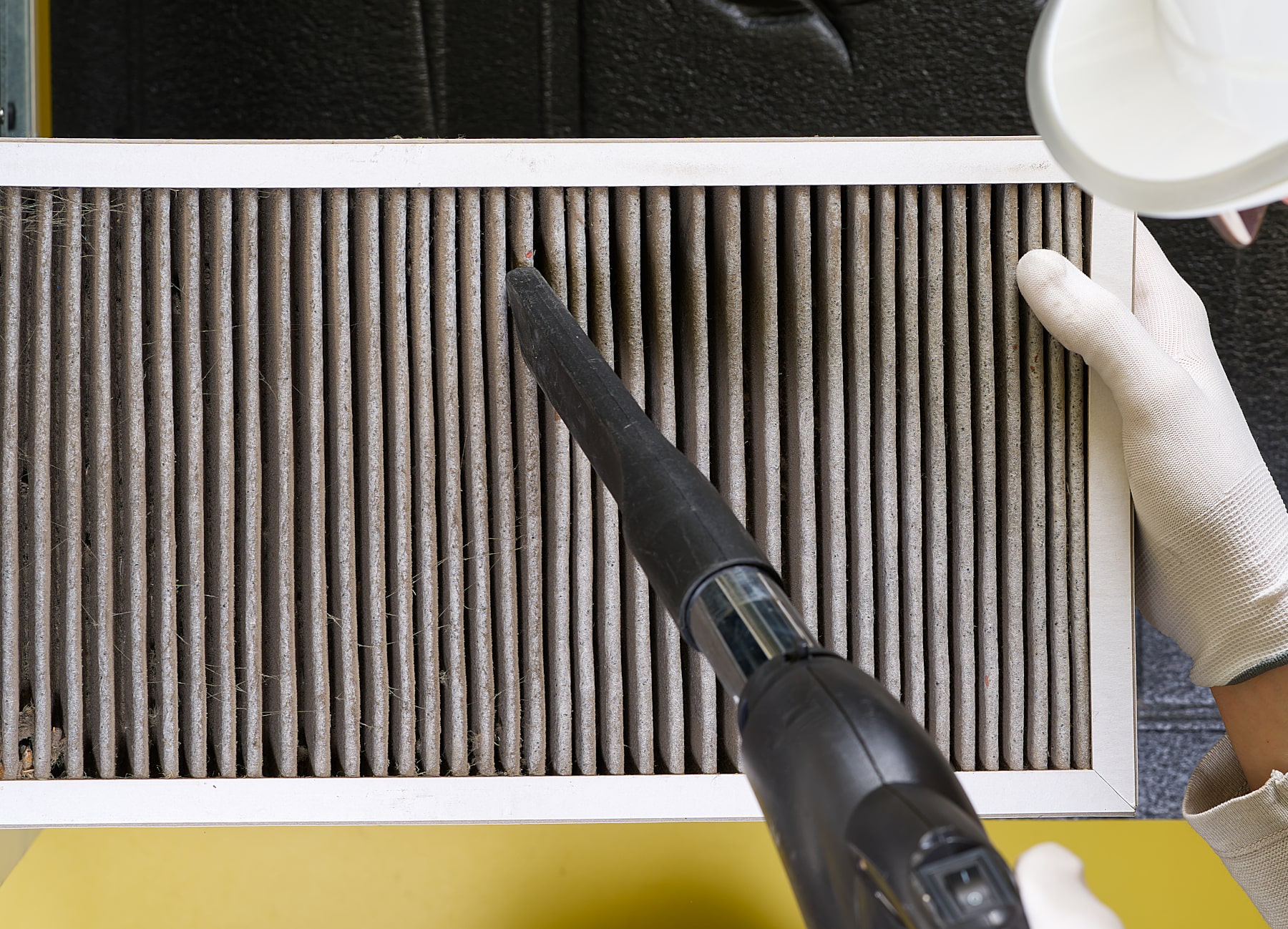
- Hit it with your vacuum: Before moving on, use your vacuum to remove any bits that were dislodged but not immediately removed by your brush.
- Scrub off the remaining debris: Grab your rag and gently scrub your filter with soapy water, removing as much dirt, loose debris, and discoloration as possible.
- Rinse and dry: With a new bucket of clean water, rinse off any remaining dirt and soap. Once you’re satisfied, let your air conditioner filter dry completely in the sun.
Pros and Cons of Using a Washable AC Filter
With sustainable and eco-friendly solutions becoming increasingly popular, many homeowners are exploring the benefits of washable air conditioner filters. Rather than going through multiple filters every couple months, a single reusable filter can be used for several years. But are they as good at catching dust and other debris as standard disposable filters? Do they require more energy? And, most importantly, how do they impact your HVAC system’s cooling abilities?
Pros of Reusable Filters
- Cost reduction: Obviously, if you aren’t buying new AC filters every few months, you’re going to save money. In general, switching to a washable filter can save you hundreds of dollars over its lifespan.
- Environmentally friendly: Reusable air conditioner filters are better for the environment since they result in less waste. If you replace your filter every two to three months, using a washable filter can prevent twenty (or more) filters from being thrown away.
- Easy to use: Using just your garden hose or your sink’s hose attachment, you can clean your filter very easily. As a result, you’ll no longer need to order (or visit the store) to get replacement filters every few months.
- Increased efficiency: Washable filters are a great way to reduce costs and boost the efficiency of your HVAC system. With regular maintenance and cleaning, you can ensure good air flow and long-term system health.
Cons of Reusable Filters
- Poor filtration: Currently, most reusable air conditioner filters have relatively low MERV ratings. Because of this, they’re not a great solution for households with pets, smokers, or people who suffer from severe allergies.
- Higher responsibility: While cleaning these filters is fairly easy, it does require diligence and time. If you’d rather just do a quick swap every couple months, using disposable AC filters may be a better option for you.
- Risk of mold and mildew: If you don’t allow your reusable filter to completely dry, there is an increased risk of mold. Because of this, it’s often best to purchase two new filters, so that you can quickly rotate in the spare while the other is drying.
Replacing Air Conditioner Filters
Even the nicest reusable air filter will need to be replaced eventually. Air conditioners can be finicky, so if you want to get the most out of your air conditioning unit, you’ll want to keep a close eye on the condition of its filter. While some are designed to last five to ten years, it’s not uncommon to have to replace them much sooner.
When you do your normal cleaning, keep an eye out for damage or buildup that can’t be removed. If you notice any, replace your filter immediately, as undue strain on your AC unit can reduce its lifespan, raise your energy bill, and negatively impact your home’s air quality.
Risks of Using an Old Filter
Air conditioners are designed to operate with clean filters, and failure to regularly inspect and clean your filter can lead to some pretty serious consequences.
Health Risks
- Allergic reactions: Dust, pollen, and dander caught in your AC filter can cause flare ups when the system continues to circulate dirty air. If you (or anyone in your household) has allergies, you may even want to clean or change your filter more frequently.
- Respiratory issues: Poor air quality resulting from a dirty filter can cause complications in people suffering from emphysema, COPD, asthma, and other respiratory illnesses.
- Mold: When your air conditioner’s filter is dirty or clogged, it turns into a haven for mold spores, which can then spread to the rest of your home. By cleaning your filter regularly, you prevent the development (and spread) of dangerous spores.
HVAC System Risks
- Utility bills: When your air conditioner isn’t running at peak efficiency, it consumes more energy, which can lead to higher utility bills. Clogged air filters can cause your AC unit to use up to 15% more energy, which translates into quite a bit of money.
- Component damage: A dirty or clogged filter forces your air conditioner to work harder, which puts more stress and strain on its internal components. As a result, it’s more likely to overheat, burn out, or suffer other costly forms of damage.
Safety Risks
- Carbon monoxide: Long-term neglect when it comes to your air conditioner’s filter can cause the heat exchanger to crack, which will then leak dangerous carbon monoxide gas into your home. No matter what, you should always place a carbon monoxide detector near your furnace.
- Fire: Dust buildup and overheating equipment are a recipe for disaster. If you neglect to clean or replace your AC filter for too long, you’re putting your home (and your family) at risk.
Calling an HVAC Professional
At R.W. LaPine, we offer the absolute best air conditioner, furnace, and HVAC services in Kalamazoo. If you want to keep your air conditioner operating for years to come, we encourage you to reach out to us to schedule an AC tune-up. Whether you use fiberglass filters, pleated filters, HEPA filters, or a regular disposable filter, you can count on us to provide accurate, professional advice.
If you’re worried about the old filter in your furnace, don’t be scared! Replacement and cleaning are extremely easy. But, if you’d rather trust your equipment to a professional, contact us today to schedule a visit.